Ahmad Zahir

Ahmad Zahir Discography

Ahmad Zahir Song History · Afghanistan Golden Era Music

The Catalogue

Ahmad Zahir's catalogue is confusing to new listeners because it was never organized the way Western discographies assume. Rather than branded studio albums with defined track listings, his recordings circulated as numbered cassette and vinyl volumes — distributed under various labels including Afghan Music, Ariana Music, and Music Centre — plus a smaller number of recordings with coherent artistic direction.

The volume series spans at least fourteen numbered entries under the main series, plus additional compilations assembled from different recording sessions. The same song occasionally appears in different mixes depending on when and where the cassette was duplicated. Many are now available digitally, though the provenance of individual recordings remains difficult to trace with scholarly certainty.

This page curates his most significant and verified recordings, organized by character rather than release sequence. That is how most listeners encounter him anyway: through one unforgettable song, before the full catalogue becomes comprehensible.

I

The Masters

His most enduring romantic recordings — ghazals drawn from classical Persian poetry and set to Western arrangements. These are the songs that built his reputation across the Persian-speaking world and remain his most-recognized recordings today.

Sultan-e Qalbam — Ahmad Zahir

سلطان قلبم

Sultan-e Qalbam

King of My Heart

This is the one everyone hears first. Sultan e Qalbam opened Vol. 7 in 1976 and immediately declared what Ahmad Zahir could do with a purely romantic ghazal: the accordion and string arrangement built around his baritone became the blueprint for Afghan pop love songs in the years that followed. Even people who don't know his name know this melody.

Watch on YouTube
Dost Daram Hamesha Hamesha — Ahmad Zahir

دوستت دارم همیشه همیشه

Dost Daram Hamesha Hamesha

I Love You, Always and Always

He says 'always' twice in the title and means it both times. The warmth of the accordion and horn section is matched note for note by how relaxed his voice sounds, like someone speaking privately rather than performing. Vol. 12 never got the credit it deserved; this song is why it should.

Watch on YouTube
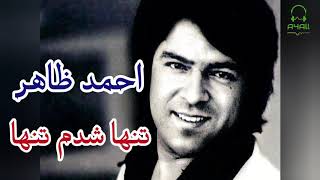
Tanha Shudam Tanha — Ahmad Zahir

تنها شدم تنها

Tanha Shudam Tanha

I Became Alone, Alone

Tanha, alone, said twice because once wasn't enough. What makes this so requested in Afghan diaspora communities across Europe and North America isn't just the lyric or the arrangement; it's something in how he delivers the word. Like he actually lived inside it when he sang.

Watch on YouTube
Asheq Shodi Ay Del — Ahmad Zahir

عاشق شده‌ای ای دل

Asheq Shodi Ay Del

O Heart, You Have Fallen in Love

He talks to his own heart the way you'd talk to a friend who keeps making terrible decisions. In classical Persian poetry, the heart gets treated as its own character who falls in love and ignores good advice. Zahir turns that literary convention into something that plays on the radio and still lands.

Watch on YouTube
Zindagi Akhir Sar Ayad — Ahmad Zahir

زندگی آخر سر آید

Zindagi Akhir Sar Ayad

Life Shall End at Last

The song that got him banned from Radio Afghanistan after the 1978 coup. The communist government understood exactly what the lyrics were saying. It's a strange thing: the ban spread it further than any broadcast could have. People passed cassettes in secret. The song was already about endings; after 1978, everyone knew which ending he meant.

Watch on YouTube

II

Global Fusions

The recordings that placed him at the intersection of musical traditions — Indian raga structures, Western pop arrangements, and Afghan melodic sensibility in the same voice.

Gar Kuni Yak Nizara — Ahmad Zahir

گر کنی یک نظاره

Gar Kuni Yak Nizara

If You Cast One Glance

He was a high school student when Radio Afghanistan recorded this, still playing in The Amateurs of Habibia. The melody comes out of North Indian raga; you can hear it in the opening phrase. But it lands in Western pop territory by the time the chorus arrives. He figured out the collision that would define his whole career at seventeen.

Watch on YouTube
Laila Jan — Ahmad Zahir

لیلا جان

Laila Jan

Dear Laila

Say the name Laila to anyone from Iran, Afghanistan, or Tajikistan and you've already invoked one of the great love stories in Persian literature. Zahir knew this. He didn't explain it; he just sang the name, and every listener brought everything they already knew. The melody does the rest.

Watch on YouTube
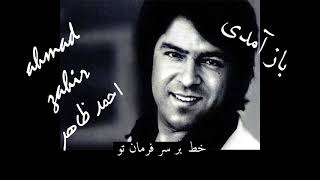
Baz Amadi — Ahmad Zahir

باز آمدی

Baz Amadi

You Have Come Back

Return songs are everywhere in Persian poetry, but few land like this one. The opening is patient; he builds to the moment of arrival rather than announcing it. When the beloved comes back in the lyric, the whole arrangement opens up. A recording that knows how to use silence and space.

Watch on YouTube

III

Folk Preservations

Ahmad Zahir understood that traditional Afghan musical heritage would fade without someone willing to carry it into modern arrangements. These recordings brought folk material to urban audiences without stripping out what made it real.

Khuda Buwat Yaret — Ahmad Zahir

خدا بُوَد یارت

Khuda Buwat Yaret

May God Be Your Friend

Khuda Buwat Yaret is one of those blessings Afghans say at every goodbye: may God be with you. Zahir didn't invent the phrase; he just sang it in a way that made people feel it freshly every time. New listeners who don't understand a word of Dari describe this as one of the first recordings they understood. The warmth is that direct.

Watch on YouTube
Az Man Begurized — Ahmad Zahir

از من بگریزید

Az Man Begurized

Flee from Me

He tells the beloved to run from him. In the ghazal tradition this is a recognized move: the lover warning the one they love to save themselves. It should feel theatrical and it doesn't; it feels honest. This recording appeared on The Kite Runner soundtrack in 2007, which brought Ahmad Zahir to a generation of listeners who would never have found their way to him otherwise.

Watch on YouTube